
Rebuilding the Broken Walls of Culture, Institutions, and National Self-Presentation
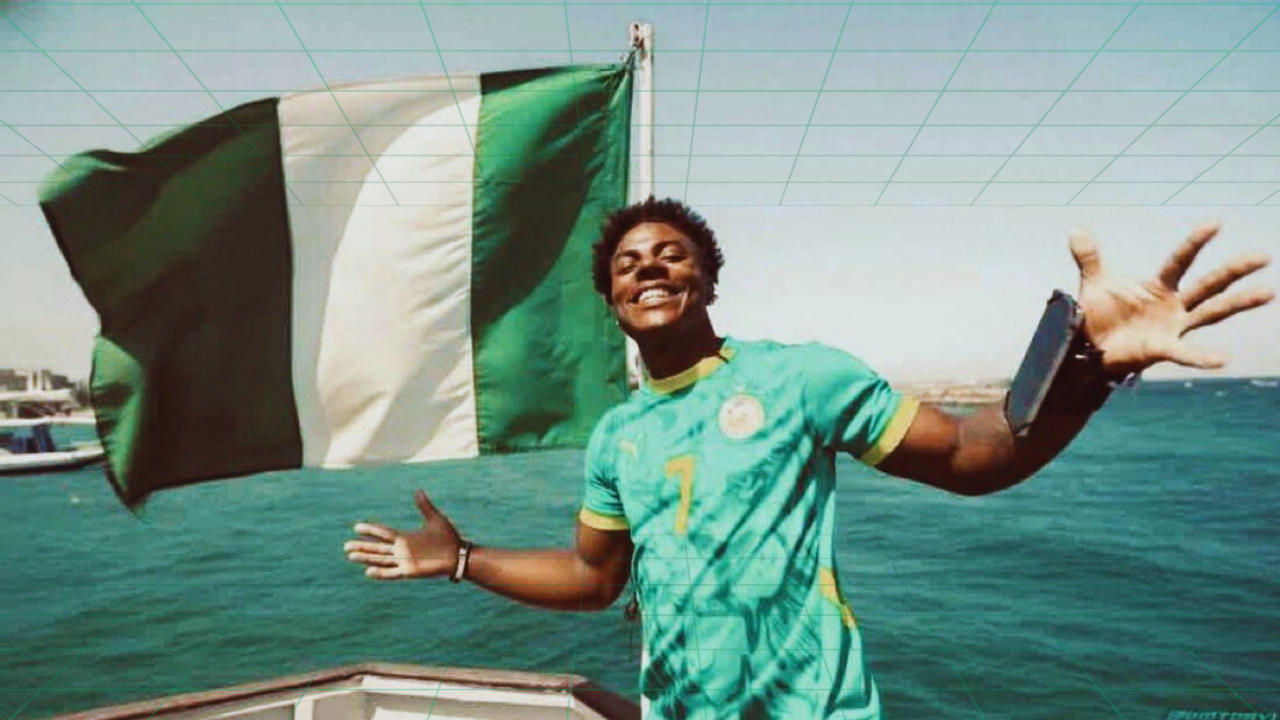
A young American streamer spent less than a day in Lagos before travelling to Benin. He mostly saw crowded markets, heavy traffic, and nightlife. In Lagos, he streamed his birthday to hundreds of thousands (where he also hit 50 million subscribers) before leaving.
On January 21, 2026, Darren Watkins Jr., known as IShowSpeed, arrived in Lagos for a planned multi-day cultural visit. Within 24 hours, he was gone.
At Balogun Market, crowds surrounded him, others demanding money: “Show me love,” “Anything for the boys.” Influencer(s) chased his convoy on horseback, climbed vehicles, and scrambled for photos. The chaos overwhelmed him. Despite positive moments, visiting the Nike Art Gallery in traditional Yoruba attire, tasting jollof rice, praising Nigerian hospitality, the lack of coordination seemed to have cut his visit short.
The contrast with other African countries was stark. Kenya’s government reached out to Speed’s team in advance and coordinated his itinerary, resulting in 8.5 million live viewers and 240,000+ concurrent viewers. Ghana went further: two months of coordination between creator Wode Maya’s team and government ministries resulted in what Speed called a “hero’s welcome,” complete with traditional naming ceremonies and an offer of citizenship. South Africa’s coordination kept him three full days, his longest stop anywhere, because it was, as he said, “too good” to leave.
In Benin, government officials organised heritage site visits and traditional performances with clear cultural context, a curated experience rather than improvised chaos.
Speed’s 28-day, 20-country Africa tour revealed a clear pattern: countries that planned received extended visits, positive global narratives, and Speed’s visible appreciation. Countries without coordination, such as Nigeria, Algeria, and Egypt, saw shortened visits and chaotic or negative coverage.
Nigeria’s response exposed a deeper problem: when a nation fails to design its cultural identity, chaos fills the vacuum. The absence of institutional coordination, cultural infrastructure, and strategic planning left Nigeria’s global image to chance rather than choice.
The Broken Walls: A Systems Diagnosis
The Wall of Geographic Identity: Lagos Is Not Nigeria
For hours, the global audience watching IShowSpeed’s livestream believed they were seeing “Nigeria.” They were seeing Lagos, one city in a nation of 36 states, over 250 ethnic groups, and six geopolitical zones spanning rainforests, savannahs, and highlands. Although Lagos becomes the national image not through conspiracy, but through convergence: it’s where international flights land, where media infrastructure concentrates, where global connections already exist. The problem isn’t Lagos’s prominence; it’s the absence of designed alternatives.
Nigeria’s geographic and cultural range is extraordinary:
- Sukur Cultural Landscape (Adamawa)
- Osun-Osogbo Sacred Grove (Osun; UNESCO World Heritage)
- Yankari National Park (Bauchi)
- Calabar Carnival (Cross River)
- Jos Plateau rock formations and climate
- Ikogosi Warm Springs (Ekiti)
None of these places appeared during his visit. Lagos, traffic, markets, and nightlife became the national brand by default, not by design.
This oversimplification reduced Nigeria’s vast diversity to the chaotic image of a single city. Speed left thinking he’d seen Nigeria, but what he actually saw was the result of unplanned national identity, a default image rather than an intentional one.
A basic design rule was missed: decide on identity before expressing it. I want to think that as a Nation, we are yet to agree, by design, on what we want the world to see. Because of this gap, Lagos often becomes the main image simply because it is where most visitors arrive, and it’s also the economic and commercial capital of Nigeria.
When Rwanda hosted Speed, they showed him the Kigali Genocide Memorial. Eswatini took him to royal palaces and explained warrior traditions. These countries understood that tourism presents national identity, not just entertainment.
This underscores a key challenge: a country must deliberate about its identity before presenting itself to the world. The key takeaway: Without deliberate choice, outsiders focus on whatever is easiest to see or most chaotic.
This raises an obvious question: Where were the systems that could have taken a high-profile visitor beyond Lagos to places like Kano’s old city, Edo’s heritage, or any well-planned route across the country?
The Wall of Cultural Definition: Tourism Reduced to Nightlife
Speed’s time in Lagos showed a deeper confusion. His itinerary included brief stops at Nike Art Gallery and Freedom Park (a former prison site), but these cultural moments were overshadowed by market chaos and improvised street interactions. Without coordinated tourism infrastructure, the visit lacked depth; no museums, no historical interpretation, no journey through Nigeria’s diverse regions and heritage sites.
Yet Nigeria’s cultural depth is not in doubt:
- Nok terracottas (among Africa’s earliest known sculptural traditions)
- Igbo-Ukwu bronzes (remarkable metallurgy and artistry)
- Benin’s artistic heritage (including bronzes, many still contested abroad)
- Yoruba palace traditions, Hausa city-states, Igbo cultures, etc., are all living systems of meaning.
The problem isn’t that Nigeria lacks heritage tourism entirely; it’s that heritage tourism exists without systems to coordinate, deepen, or scale meaningful cultural experiences for high-profile visitors. Brief gallery visits and improvised market stops cannot substitute for designed cultural journeys that reveal Nigeria’s civilizational complexity.
The Wall of Economic Psychology: The Trauma of Scarcity
At Lagos Balogun Market, the main demand was simple: “What will you give us?” “Show me love.” “Anything for the boys.” Across the scene, from vendors and fans to opportunists and creators chasing the moment, many interactions focused on getting something right away before the chance was gone.
People often call this behaviour greedy or rude. It is much more than that. It comes from trauma.
Nigeria’s economic instability over decades has created a scarcity psychology that, for many, functions as survival logic. When economic security feels uncertain, interactions can become transactional by default. Opportunities are evaluated through the lens of “what’s in it for me?”
What makes this particularly revealing is that this psychology appears across economic classes. Wealthy influencers scrambled for access to Speed, not because they needed money, but because the scarcity mindset can persist even after economic mobility. The psychology of extraction; of needing to get something from every opportunity- transcends economic boundaries in contexts where formal systems are weak.
Nigerian social dynamics often reflect patterns of patronage and informal exchange. The poor seek support from the wealthy: “Anything for the boys.” The middle class seeks access to those with connections. The wealthy seek favour from the powerful. These patterns emerge not from moral failure, but from decades of navigating systems where formal pathways often don’t work reliably.
This is what Speed’s livestream captured: not inherent character flaws, but adaptive behaviours shaped by systemic gaps.
The fundamental problem is structural: without systems that channel attention into lasting value creation, Nigeria’s growing global digital profile amplifies short-term extraction over long-term participation. Until formal cultural and economic infrastructure is established, many interactions default to informal, transactional exchanges.
In Benin, Speed encountered less begging, not because Beninese people are fundamentally different, but because their tourism systems, even if modest, appear to have created formal pathways for cultural producers to participate. Nigeria’s weaker systems leave many people relying on informal, opportunistic approaches when global moments arise.
The Wall of Values Architecture: Hustle Culture as Operating System
During Speed’s visit, the visible chaos suggested a dominance of individual opportunism over collective coordination. The question many seemed to ask was: “How can I benefit from this moment?” rather than “How can we present Nigeria well?”
This reflects what Nigerians call “hustle culture”—a survival-oriented entrepreneurialism that has driven many personal successes but can undermine collective action when it becomes the predominant operating mode.
This isn’t about judging individuals. It’s about recognising how systems shape behaviour and what happens when institutional coordination is absent.
Hustle culture has genuinely helped many Nigerians overcome obstacles and create opportunities. But when individual survival strategies dominate in moments that require collective coordination, chaos often follows. The challenge emerges when short-term personal positioning crowds out the slower work of building shared infrastructure.
The pattern visible during Speed’s visit suggested a values hierarchy shaped by decades of institutional weakness:
- Immediate personal or family benefit
- An extended network or ethnic group advantage
- National interest (often subordinated to more immediate concerns)
This hierarchy isn’t about Nigerian character. It’s an adaptive response to systems in which formal institutions often don’t provide reliable pathways to security or opportunity. When individual extraction becomes more rational than collective building, coordination becomes difficult.
The core insight: culture shapes strategy. Without institutions that make collective dignity rewarding and achievable, appeals to national pride struggle to compete with immediate survival or advancement concerns.
The contrast with Benin is instructive: those who engaged with Speed there appeared to balance hospitality with national presentation. This likely reflects not inherent superiority, but the presence of institutional frameworks that made coordinated cultural stewardship the expected norm for such moments.
The Wall of Institutional Authority: Where Was Leadership?
This is the hardest problem to talk about, but also the most directly addressable. Having seen how leadership shaped experiences elsewhere, the question now is: where was institutional authority during Speed’s visit to Nigeria?
When a high-profile visitor’s tour is announced in advance, cultural institutions should be prepared. This means engaging in outreach, coordinating efforts, defining protocols, and ensuring a minimal presence that signals order and stewardship.
So the question is simple:
Where were the relevant public institutions (federal and state) responsible for culture and tourism coordination?
Nigeria has tourism structures (including the Nigerian Tourism Development Authority and a federal ministry responsible for culture/tourism/creative economy). Yet in the most globally visible moments such as this one, institutional presence often appears absent or inconsistent.
When IShowSpeed’s team announced his Africa tour weeks in advance, Nigeria’s cultural institutions had an opportunity to prepare. Early outreach. Coordination. Designed itineraries. Cultural guides. But no visible institutional coordination emerged.
No government minister publicly welcomed him. No cultural officer appeared to coordinate experiences. No visible institutional presence provided structure or dignity. Whatever internal discussions may have occurred, the result was the same: no coordinated cultural stewardship was evident.
In the absence of institutional coordination, influencers and street crowds filled the void. Without designated leadership, improvisation became the default.
When formal institutions don’t visibly coordinate such moments, informal actors fill the gap (in this case, influencers, crowds, opportunists). In these situations, chaos becomes the predictable outcome.
The contrast with Benin is instructive. Government officials personally organised Speed’s tour there. Ministry representatives led his cultural experiences. Institutional authorities demonstrated visible cultural stewardship.
But the contrast extends beyond Benin. Ghana provides the clearest example of what coordination looks like: Creator Wode Maya and his team spent over two months preparing for Speed’s visit; site visits, security briefings, cultural protocols, and stakeholder alignment across public and private sectors. As Wode Maya later explained: “What people see is a few hours of high energy. What they don’t see is 2+ months of planning, site visits, security briefings, cultural coordination, alignment across public and private stakeholders to make it happen.”
The Ghanaian government supported this effort with institutional facilitation: visa processing, Tourism Ministry coordination, and Foreign Affairs Ministry engagement. The result: Speed called it a “hero’s welcome,” with traditional naming ceremonies, an offer of citizenship, and one of his most positive African experiences.
Kenya’s government reached out to Speed’s team before his arrival and coordinated his experience, resulting in peak viewership of 8.5 million and a positive cultural narrative. South Africa’s institutional-creative coordination led to Speed staying three full days, longer than anywhere else, visiting schools, cultural centres, and community spaces with proper context and guidance.
The pattern suggests a gap in how Nigerian institutions approach cultural diplomacy moments. Whether this reflects capacity constraints, unclear mandates, insufficient coordination mechanisms, or deprioritization of cultural stewardship remains unclear. But the visible outcome is consistent: major cultural moments unfold without apparent institutional coordination.
The main argument is rooted in a design principle: coordinated order shapes national meaning. Without visible institutional authority, major cultural moments become chaotic spectacles rather than purposeful representations of national identity.
Design as Diagnosis: What the Contrast Reveals
To understand what went wrong in Nigeria, it helps to look at the bigger picture. This is not about resources or cultural depth. Nigeria has more of both than Benin. The real difference is in how systems are designed.
This difference is a call to action for Nigeria. The country has a rich and unique culture, but it needs to plan how to share it with the world. Nigeria should not leave its image up to chance. Leaders and cultural stewards must guide, protect, and share the nation’s full story with the world, starting now.
Speed’s 28-day, 20-country Africa tour revealed a clear coordination spectrum:
Countries that coordinated in advance: Ghana (creator-government partnership, Kenya (government outreach pre-arrival), South Africa (institutional-creative collaboration), Eswatini (royal cultural protocols), Morocco (AFCON integration and professional reception)—all received extended visits, positive global narrative, high viewership, and Speed’s visible appreciation.
Countries without coordination: Nigeria (no institutional presence), Algeria (crowd chaos and organisational difficulties), resulting in shortened visits and chaotic narratives.
Mixed experiences: Egypt combined improvised cultural moments (traditional attire, Pyramids livestream, praised Tanoura dance) with challenges, showing that content-rich experiences can emerge even without full coordination, though structured planning would have deepened impact.
The pattern is undeniable: preparation determines perception.
The contrast is about architecture.
- Countries with systems offered clear narrative paths: heritage, context, guided experiences, and institutional coordination.
- Lagos revealed what happens when attention arrives faster than institutions can steward it.
This isn’t a content problem. Nigeria’s content is rich.
The real issue is infrastructure: having ingredients but no recipe, culture without guidance, talent without teamwork, and identity without a plan.
A garden does not become beautiful by accident. It needs planning, paths, signs, care, and timing. Nigeria has all the plants, but too often, it has not planned the design.
The Restoration Work: Rebuilding from Design Principles
These broken walls can be rebuilt, but not with slogans. Not with one viral campaign. With systems.
Principle 1: Restore Institutional Cultural Authority
Standing protocols for high-profile cultural visitors: outreach, itinerary design support, security coordination, crowd management standards, and clear lines of responsibility.
- Designated cultural liaison officers (federal and state)
- A basic “visitor experience protocol” for major public figures
- A rapid coordination channel between federal, state, and local institutions
- A public-facing framework that signals: Nigeria is prepared to host the world
Ghana’s model proves this works: Two months of advance coordination between creators (Wode Maya’s team) and government institutions (Tourism Ministry, Foreign Affairs) resulted in Speed’s most celebrated African stop. The protocol wasn’t rigid—it was flexible enough for spontaneity within structure. That’s the balance Nigeria needs.
This is not about being elitist. It is about taking care of what matters.
Principle 2: Design Nigeria Beyond Lagos
Build national cultural routes that make Nigeria’s diversity legible and accessible.
Examples:
- Northern Heritage Route (historic cities, landscapes, festivals)
- Southwestern Sacred/Arts Route (Osun-Osogbo, artistic centres, palace heritage)
- Eastern Cultural Journey (sites, crafts, performance traditions)
- Niger-Delta Cultural Corridor (festivals, waterways, cultural centres)
Also, Nigeria’s two UNESCO World Heritage Sites should be visitor-ready with interpretive centres, trained guides, and booking infrastructure. These sites should not be hidden gems known mainly to locals and researchers.
Principle 3: Build Cultural Economic Participation Infrastructure
Shift from extraction to creation by formalising pathways:
- A cultural producers platform (guides, artisans, performers, experiences)
- Clear pricing and booking systems
- Quality certification and training for cultural interpretation
- Value chain mapping so local vendors aren’t excluded by default
The goal is simple: it should be easier for people to earn a living with dignity than to beg out of need.
Principle 4: Reconstruct Values Through Incentives and Modelling
Values don’t shift through speeches alone. They shift when:
- leaders model service publicly
- systems reward coordination
- Education teaches stewardship, not just ambition.
- National narratives celebrate contribution, not only accumulation.
This kind of change takes time. But every country that has built a strong identity has done something similar.
Principle 5: Develop Heritage Tourism Infrastructure
Nigeria needs heritage tourism systems that can stand beside entertainment tourism, not compete with it.
- Modernised museums and cultural centres that tell Nigeria’s story with excellence
- Visitor-ready heritage sites with interpretation, signage, guides, and safety
- A guide training academy (storytelling, history, hospitality, languages)
- It is important to be clear: both entertainment tourism and heritage tourism matter, but they need different approaches.
The Choice Nigeria Must Make
The next major global visitor, whether influencer, diplomat, investor, or tourist, will encounter one of two realities.
Option 1: The Same Default
- Lagos is the whole story.
- Spectacle without structure.
- Informal extraction is the main economic interface.
- Institutional silence.
- Chaos livestreamed as “culture”.
Option 2: A Rebuilt Nation
- Coordinated cultural routes that reveal diversity.
- Heritage tourism is functioning alongside entertainment.
- Economic participation systems that preserve dignity.
- Institutions showing up more with clarity and order.
- Nigeria’s depth presented with intention.
The plan for Option 2 is real. It is about doing the work; building identity, designing services, coordinating institutions, and creating economic systems. And we know it works because Ghana, Kenya, South Africa, and others proved it during Speed’s tour.
Wode Maya’s reflection captures the essence: “What people see is a few hours of high energy. What they don’t see is 2+ months of planning, site visits, security briefings, cultural coordination.” That’s the infrastructure Nigeria needs to build.
This requires:
Designers who understand that identity architecture and systems thinking apply to nations, not just brands. Leaders who value long-term dignity over short-term individual hustle. Institutions willing to show up consistently and do unglamorous cultural stewardship work. Citizens are willing to shift from an extraction to a creation mindset. Vision for who Nigeria wants to be when the world watches.
Benin, though smaller, with fewer resources and less cultural diversity, showed what happens when culture is planned rather than just performed. They created strong foundations that protected their identity with dignity when the world was watching. Ghana demonstrated what coordination between creators and government can achieve. Kenya showed how advanced institutional outreach shapes positive narratives. South Africa proved that when systems work, visitors don’t want to leave.
These are not exceptional countries with impossible advantages. They simply made deliberate choices. Nigeria has yet to make Benin’s example, Ghana’s coordination model, and Kenya’s institutional preparation all show a simple truth: when culture is cared for, it is easy to understand. When it is not, attention only brings confusion.
Nigeria has everything required: heritage, talent, diversity, creativity, and global relevance. What it lacks is a consistent infrastructure to hold it all together when the world is watching.
The foundations are broken. The problem is clear. The work begins when leaders decide that Nigeria’s dignity is worth the slow, hard work of rebuilding.
The only question that remains is the same one:
Will Nigeria build?
